To Absolute
Breathtaking Beauty
and reduce water consumption at the same time !
Xeriscape landscaping focuses on water conservation
by replacing traditional lawns with drought-tolerant
native plants, rocks, and efficient drip irrigation. This
approach can reduce outdoor water use by up to 70%,
which is vital for Colorado’s arid climate.
JM Hayes Landscape was founded with a passion for
creating sustainable, water-efficient landscapes.
Committed to conservation and thoughtful design, we
help clients transform their outdoor spaces into
functional, beautiful environments that thrive with
minimal water use.

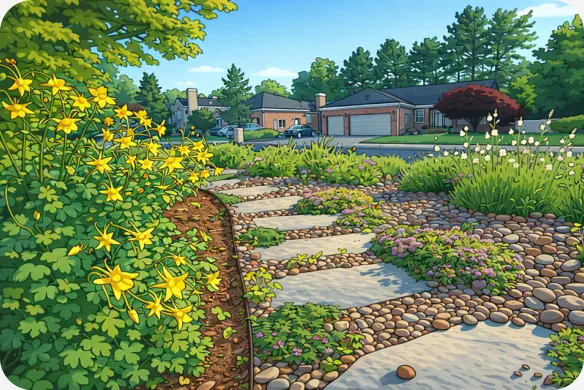
At JM Hayes Landscape, we're passionate about creating
landscapes that benefit both the environment and our
clients through water-wise landscaping. Our approach
involves designing sustainable landscapes that harmonize
with our local climate, while simultaneously requiring
minimal maintenance and water. This not only helps you
save on water bills but also reduces your overall water
consumption.
Whether you're considering a fresh landscape or a
transformation of your current one, we are here to assist
you in crafting beautiful and sustainable outdoor spaces
that fulfill your desires.
Water Efficient Landscaping FORT COLLINS
‘Xeriscape’ NOT ‘Zeroscape’
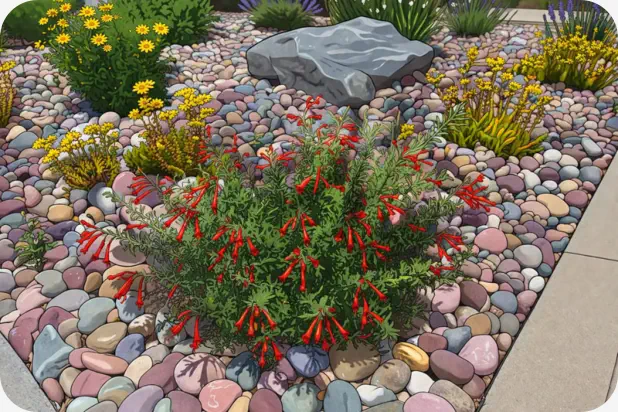
A ‘zeroscape’ is a landscape comprised of nothing but rocks, usually gravel. Devoid of
plants, and therefore habitat, they create heat islands and lack beauty. They may have
an application in small, select areas but they are not desirable and still get weeds!

Water efficient landscaping is no longer just a trend in Fort Collins, Colorado. It has become a smart, responsible, and attractive way to
create outdoor spaces that fit the local climate, conserve water, reduce maintenance, and improve curb appeal. In a place known for
sunshine, dry summers, wind, clay soils, and changing weather, traditional high-water lawns can be expensive and difficult to maintain.
A well-designed water-wise landscape gives homeowners and businesses a better option: a yard that looks beautiful, functions well,
and uses water wisely.
The first step in water efficient landscaping is planning. Before removing grass or buying plants, it is important to look at how the yard
is used. A family with children or pets may still want a smaller turf area for play. A front yard may need strong curb appeal. A backyard
may need outdoor living space, privacy, shade, and low-maintenance planting beds. The best landscapes organize the yard into
practical zones. High-use areas can receive more water, while low-use areas can be converted to drought-tolerant beds or native
plantings.
Hydrozoning is one of the most important principles of water-wise design. This simply means grouping plants according to their water
needs. Plants that need regular moisture should be placed together, ideally near the house or in areas where water is easy to manage.
Very drought-tolerant plants should be grouped in hotter, drier parts of the yard. This prevents the common problem of watering an
entire landscape just to keep a few thirsty plants alive. When plants with similar needs are grouped together, irrigation becomes more
efficient and plant health improves.
Soil preparation is another key part of success in Fort Collins. Many local yards have compacted or clay-heavy soil, which can cause
water to run off instead of soaking in. Healthy soil acts like a sponge. Adding compost and improving soil structure helps water move
deeper into the root zone, where plants can actually use it. Better soil also encourages stronger roots, which makes plants more
resilient during heat, drought, and winter stress. Skipping soil preparation can lead to poor plant growth and wasted water, even in a
low-water landscape.
Choosing the right plants is where water efficient landscaping becomes exciting. Fort Collins homeowners can choose from many
attractive low-water plants that bring color and texture throughout the seasons. Native and regionally adapted plants are especially
useful because they are suited to Colorado’s sun, wind, temperature swings, and lower rainfall. Popular choices may include
ornamental grasses, rabbitbrush, penstemon, yarrow, blue grama grass, blanket flower, Russian sage, serviceberry, Apache plume,
chokecherry, and many varieties of salvia and coneflower. A good design includes a mix of bloom times so the landscape has interest
from spring through fall.
Turf does not have to disappear completely, but it should be used intentionally. Instead of having grass by default, homeowners can
ask where lawn is truly useful. A smaller, well-shaped lawn area can be easier to water, mow, and maintain than a large patch of turf
that nobody uses. In some areas, traditional lawn can be replaced with native grasses, low-water groundcovers, mulch beds, or
hardscape features such as patios and walkways. Reducing unnecessary turf is often one of the fastest ways to lower outdoor water
use.
Irrigation is where many landscapes either save water or waste it. Even a xeriscape needs water during establishment, and most
landscapes benefit from some irrigation during dry periods. The difference is how the water is delivered. Drip irrigation is usually best
for planting beds because it sends water directly to the root zone with less evaporation and overspray. Efficient sprinkler heads, smart
controllers, rain sensors, and soil moisture sensors can help lawns and planting areas receive the right amount of water at the right
time. Sprinklers should be checked regularly for leaks, broken heads, overspray onto sidewalks, and poor coverage.
Mulch is another simple but powerful tool. Organic mulch, such as wood mulch, helps reduce evaporation, moderate soil temperature,
suppress weeds, and improve soil over time as it breaks down. Rock mulch can be useful in certain areas, but too much rock around
plants can increase heat stress. A balanced design uses mulch to protect the soil while still allowing plants to be the main feature.
Fort Collins residents also have access to helpful local resources. Fort Collins Utilities offers programs, rebates, classes, sprinkler
evaluations, and water conservation information that can help homeowners plan and improve their landscapes. These resources can
make water-wise upgrades more affordable and less intimidating, especially for people who are not sure where to begin. Before
starting a turf replacement project, homeowners should check current program requirements and get approval where required.
Water efficient landscaping is a practical choice for Fort Collins because it matches the way people want to live today. It saves water,
supports pollinators, improves curb appeal, reduces unnecessary maintenance, and creates outdoor spaces that feel natural in
Northern Colorado. Whether the project is a small front-yard conversion, a backyard remodel, or a complete landscape
transformation, the best results come from careful planning and smart plant choices.
A beautiful yard in Fort Collins does not need to be a thirsty yard. With the right design, homeowners can enjoy color, shade, texture,
outdoor living space, and seasonal interest while using water more responsibly. Water efficient landscaping is not about giving
something up. It is about creating a landscape that works better for the home, the climate, and the future of Colorado.
To Absolute
Breathtaking Beauty
and reduce water consumption
at the same time !
XERISCAPING IN
FORT COLLINS COLORADO
‘Xeriscape’ NOT ‘Zeroscape’
A ‘zeroscape’ is a landscape comprised of
nothing but rocks, usually gravel. Devoid of
plants, and therefore habitat, they create heat
islands and lack beauty. They may have an
application in small, select areas but they are
not desirable and still get weeds!
Xeriscape landscaping focuses on water
conservation by replacing traditional lawns with
drought-tolerant native plants, rocks, and
efficient drip irrigation. This approach can
reduce outdoor water use by up to 70%, which
is vital for Colorado’s arid climate.
JM Hayes Landscape was founded with a
passion for creating sustainable, water-efficient
landscapes. Committed to conservation and
thoughtful design, we help clients transform
their outdoor spaces into functional, beautiful
environments that thrive with minimal water
use.
At JM Hayes Landscape, we're passionate about
creating landscapes that benefit both the
environment and our clients through water-
wise landscaping. Our approach involves
designing sustainable landscapes that
harmonize with our local climate, while
simultaneously requiring minimal maintenance
and water. This not only helps you save on
water bills but also reduces your overall water
consumption.
Whether you're considering a fresh landscape
or a transformation of your current one, we are
here to assist you in crafting beautiful and
sustainable outdoor spaces that fulfill your
desires.

Water efficient landscaping is no longer just a
trend in Fort Collins, Colorado. It has become a
smart, responsible, and attractive way to create
outdoor spaces that fit the local climate,
conserve water, reduce maintenance, and
improve curb appeal. In a place known for
sunshine, dry summers, wind, clay soils, and
changing weather, traditional high-water lawns
can be expensive and difficult to maintain. A
well-designed water-wise landscape gives
homeowners and businesses a better option: a
yard that looks beautiful, functions well, and
uses water wisely.
The first step in water efficient landscaping is
planning. Before removing grass or buying
plants, it is important to look at how the yard is
used. A family with children or pets may still
want a smaller turf area for play. A front yard
may need strong curb appeal. A backyard may
need outdoor living space, privacy, shade, and
low-maintenance planting beds. The best
landscapes organize the yard into practical
zones. High-use areas can receive more water,
while low-use areas can be converted to
drought-tolerant beds or native plantings.
Hydrozoning is one of the most important
principles of water-wise design. This simply
means grouping plants according to their water
needs. Plants that need regular moisture
should be placed together, ideally near the
house or in areas where water is easy to
manage. Very drought-tolerant plants should
be grouped in hotter, drier parts of the yard.
This prevents the common problem of watering
an entire landscape just to keep a few thirsty
plants alive. When plants with similar needs are
grouped together, irrigation becomes more
efficient and plant health improves.
Soil preparation is another key part of success
in Fort Collins. Many local yards have
compacted or clay-heavy soil, which can cause
water to run off instead of soaking in. Healthy
soil acts like a sponge. Adding compost and
improving soil structure helps water move
deeper into the root zone, where plants can
actually use it. Better soil also encourages
stronger roots, which makes plants more
resilient during heat, drought, and winter
stress. Skipping soil preparation can lead to
poor plant growth and wasted water, even in a
low-water landscape.
Choosing the right plants is where water
efficient landscaping becomes exciting. Fort
Collins homeowners can choose from many
attractive low-water plants that bring color and
texture throughout the seasons. Native and
regionally adapted plants are especially useful
because they are suited to Colorado’s sun,
wind, temperature swings, and lower rainfall.
Popular choices may include ornamental
grasses, rabbitbrush, penstemon, yarrow, blue
grama grass, blanket flower, Russian sage,
serviceberry, Apache plume, chokecherry, and
many varieties of salvia and coneflower. A good
design includes a mix of bloom times so the
landscape has interest from spring through fall.
Turf does not have to disappear completely,
but it should be used intentionally. Instead of
having grass by default, homeowners can ask
where lawn is truly useful. A smaller, well-
shaped lawn area can be easier to water, mow,
and maintain than a large patch of turf that
nobody uses. In some areas, traditional lawn
can be replaced with native grasses, low-water
groundcovers, mulch beds, or hardscape
features such as patios and walkways.
Reducing unnecessary turf is often one of the
fastest ways to lower outdoor water use.
Irrigation is where many landscapes either save
water or waste it. Even a xeriscape needs water
during establishment, and most landscapes
benefit from some irrigation during dry
periods. The difference is how the water is
delivered. Drip irrigation is usually best for
planting beds because it sends water directly to
the root zone with less evaporation and
overspray. Efficient sprinkler heads, smart
controllers, rain sensors, and soil moisture
sensors can help lawns and planting areas
receive the right amount of water at the right
time. Sprinklers should be checked regularly for
leaks, broken heads, overspray onto sidewalks,
and poor coverage.
Mulch is another simple but powerful tool.
Organic mulch, such as wood mulch, helps
reduce evaporation, moderate soil
temperature, suppress weeds, and improve soil
over time as it breaks down. Rock mulch can be
useful in certain areas, but too much rock
around plants can increase heat stress. A
balanced design uses mulch to protect the soil
while still allowing plants to be the main
feature.
Fort Collins residents also have access to
helpful local resources. Fort Collins Utilities
offers programs, rebates, classes, sprinkler
evaluations, and water conservation
information that can help homeowners plan
and improve their landscapes. These resources
can make water-wise upgrades more
affordable and less intimidating, especially for
people who are not sure where to begin.
Before starting a turf replacement project,
homeowners should check current program
requirements and get approval where required.
Water efficient landscaping is a practical choice
for Fort Collins because it matches the way
people want to live today. It saves water,
supports pollinators, improves curb appeal,
reduces unnecessary maintenance, and creates
outdoor spaces that feel natural in Northern
Colorado. Whether the project is a small front-
yard conversion, a backyard remodel, or a
complete landscape transformation, the best
results come from careful planning and smart
plant choices.
A beautiful yard in Fort Collins does not need to
be a thirsty yard. With the right design,
homeowners can enjoy color, shade, texture,
outdoor living space, and seasonal interest
while using water more responsibly. Water
efficient landscaping is not about giving
something up. It is about creating a landscape
that works better for the home, the climate,
and the future of Colorado.